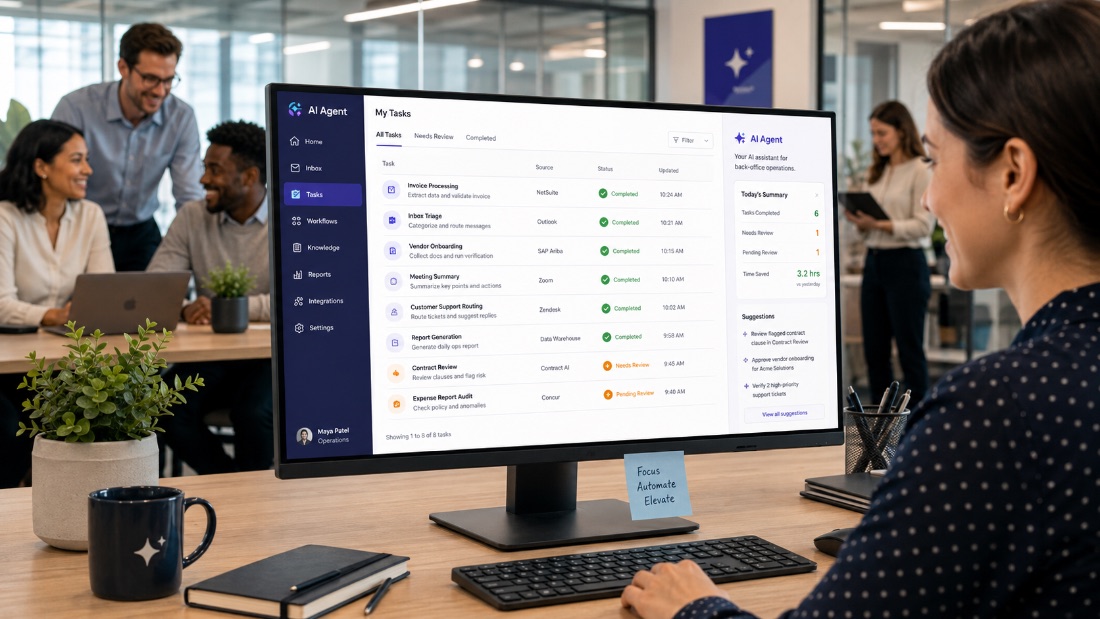
Back-office automation
Cross-system workflows that cut manual handoffs and rework.
We map your roles and processes end to end, find where AI and automation actually pay off, and build it — measurable hours back, fewer handoffs, less risk. No automation for automation’s sake.
We start by understanding the work, then automate the parts that genuinely should be — and leave the rest to people.
A clear map of who does what, where time goes, and where the friction is.
Honest scoring of what’s worth automating — and what isn’t.
Automations that move work across your systems without the manual handoffs.
Vision and language models that read, extract and route documents and data.
Agents that own multi-step processes end to end where it makes sense.
Training and rollout so your people adopt it — not work around it.
We don’t guess. We map the real process, target the right work, and prove the result.
We deploy AskVicky to document roles, steps, systems and time across the workflow.
We score by impact, effort and risk, and rule out the wrong ones.
We build the automations and agents, integrated with your stack.
We instrument hours saved, error rates and throughput as it scales.
A structured discovery of where automation creates real ROI in your business — grounded in how your team actually works, not how the org chart says they do.
Before we automate a single step, AskVicky maps the real operation: the workflows, the bottlenecks, and the shadow systems quietly holding everything together. It’s how we know what’s worth automating — and what to leave alone.


Policies, roster, org chart, and product & market review.
Founder and executive surveys and interviews.
Middle-management surveys and interviews.
Frontline input on how the work really happens.
Multi-pass divergent analysis across everything gathered.
The Operations Intelligence Report, ready to act on.
Every engagement runs inside Vicky’s guardrails — sensitive employee and company data is handled to a standard your people and your board can trust.
Vicky runs structured interviews that go past the org chart — separating process gaps from people problems, and probing exactly where decisions stall.
Vicky
Live interview
A single document your leadership team, board and operations leads can act on — backed by interview data, scored against industry-standard maturity rubrics, and prioritized by ROI.
Every workflow, scored across 8 maturity dimensions (CMMI-aligned).
Where work actually gets stuck — Theory of Constraints applied to your operations.
The spreadsheets, side-channels and workarounds quietly holding the company together.
Where what leadership thinks happens differs from what actually happens.
Tier A / B / C candidates ranked by ROI, readiness and risk.
What to do first. What to stabilize before automating. What to leave alone.
Process intelligence applied where the handoffs and paperwork pile up.
Cross-system workflows that cut manual handoffs and rework.
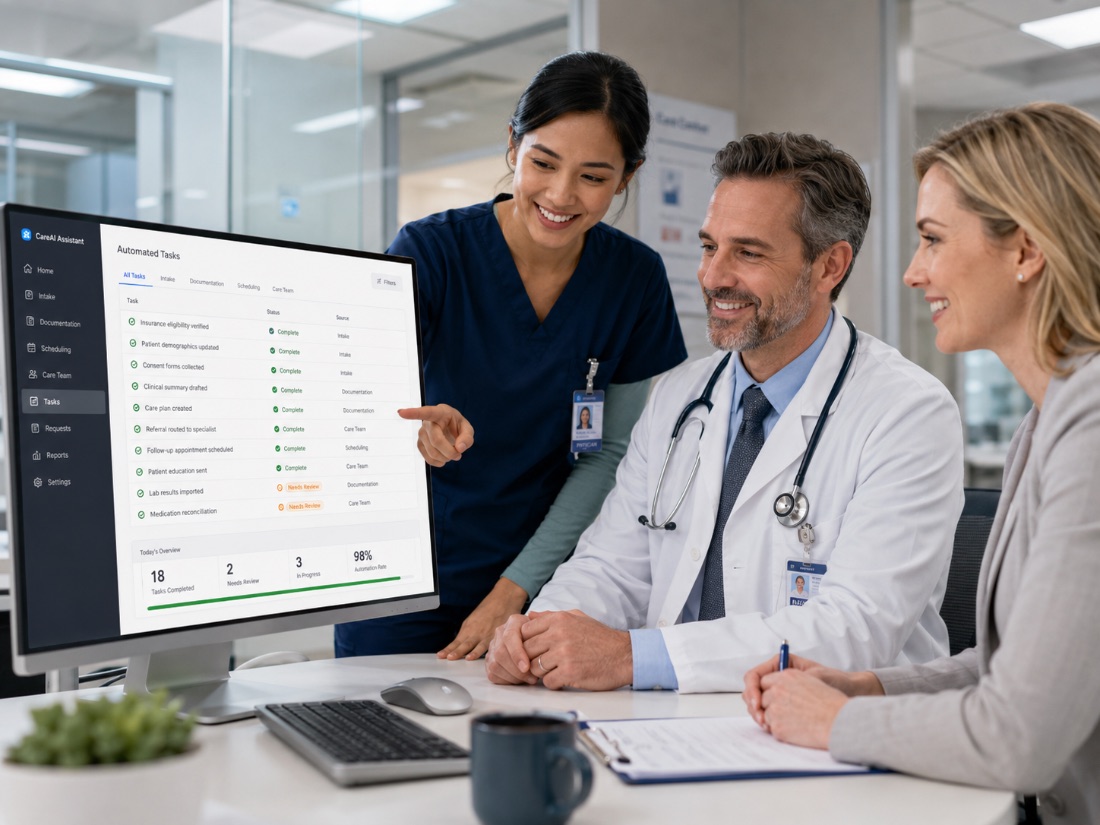
Automating documentation, scheduling and coordination around care.

Automation built to the audit and safety standards of the sector.
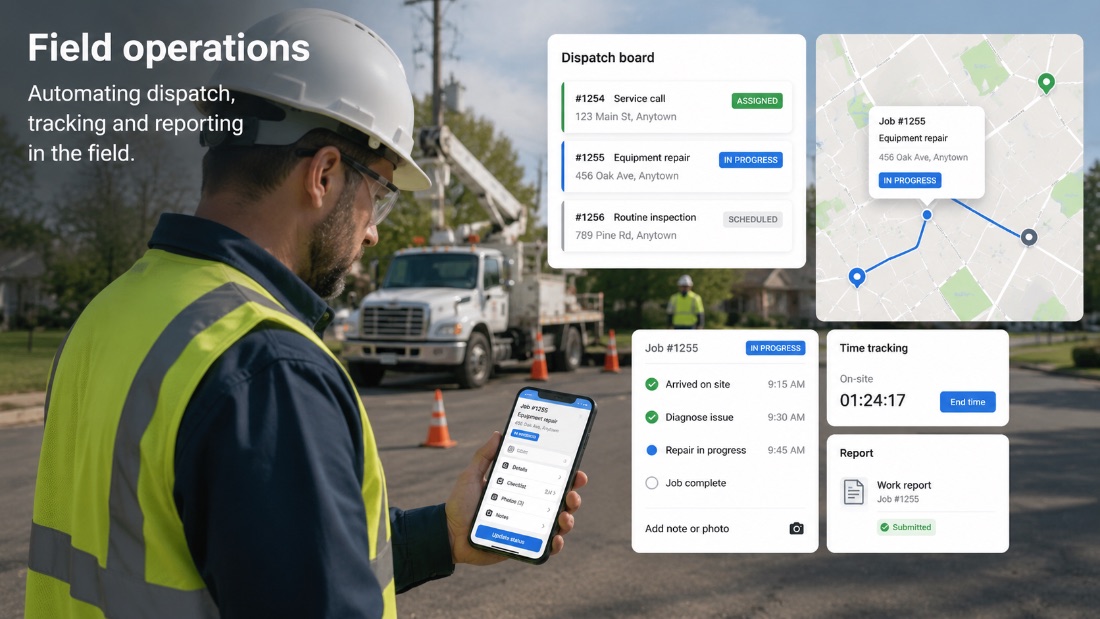
Automating dispatch, tracking and reporting in the field.
We map roles and processes end to end, then score each opportunity by return — hours saved, error reduction, and risk — so you automate what actually pays off rather than what looks impressive.
Automation handles defined, repeatable workflows deterministically, while AI agents take action across systems where judgment is needed. We apply each where it fits, using AI only where it creates differentiated value.
Most automation projects fail because nobody maps the work first. The ones that succeed map processes, score ROI, and know where automation creates value before building anything.
It starts with role and process mapping and opportunity scoring, then builds the highest-return workflows first so you see measurable hours back early.
Tell us what you're trying to do. We'll tell you honestly whether AI is the right tool — and if it is, how we'd build it.